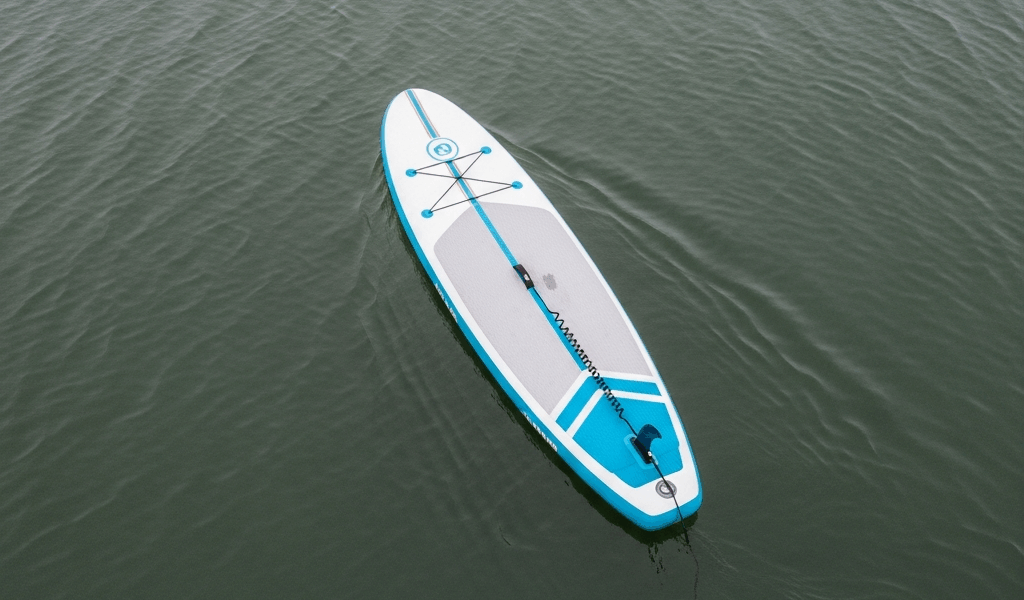
Paddleboard Keeps Drifting Sideways — How to Fix
Your paddleboard drifts sideways, and you’re not sure why. You’re paddling straight. The board feels stable. But every few strokes, you’re veering left or right like someone’s steering you with an invisible hand. I’ve been there — and honestly, I wasted an entire summer blaming my board when the real problem was staring me in the face.
As someone who learned to paddleboard in Elliott Bay before understanding Seattle’s tidal patterns, I spent months fighting lateral drift that I genuinely thought was a equipment issue. Turns out, I was wrong about almost everything. The good news though? Sideways drift is rarely about the board itself. It’s usually about what you’re doing with your paddle, how wind and current are moving, or subtle issues with your fin and weight distribution. Once you know what to look for, you can fix it in minutes.
Why Your Paddleboard Drifts Sideways in the First Place
Before you start tinkering with your setup, understand what’s actually pushing your board sideways. There are five main culprits here, and they’re not all about technique.
Wind direction and force. This is the most obvious one, but also the most underestimated. Puget Sound and Elliott Bay create predictable wind patterns — thermal winds push northeast in the afternoon, and winter storms come from the southwest. When wind hits your board’s side, it doesn’t just slow you down. It pushes your board laterally, especially if you’re paddling into the wind or with a crosswind hitting you square.
Current flow and tidal movement. Lake Union’s currents shift based on tidal cycles. The Ballard Locks push water in and out, creating lateral flow that most casual paddlers don’t notice until they’re suddenly 100 yards off their intended line. Puget Sound’s deeper currents are even more pronounced — and much less forgiving. If you’re paddling during slack tide, you won’t see drift. Paddle during tidal change, and drift becomes unavoidable — that’s just physics.
Uneven paddle strokes. This is where most people go wrong. If one side of your paddle reaches farther than the other, or if your blade angle differs between left and right strokes, you’re creating asymmetrical push. A reach difference of just two inches per stroke compounds over 500 meters. That’s how you end up 50 feet off course without understanding why.
Fin alignment and damage. A bent fin, a fin box that’s loose, or a fin that’s not positioned straight in the box will create constant lateral pressure. The fin is your rudder — treat it that way. If it’s compromised, your board will drift toward the side of the problem like it’s magnetized.
Body weight distribution. Your weight position on the board matters more than most people think. If you’re sitting or standing slightly off-center — favoring one side of the board — you’re changing how the board tracks through the water. Lean right, and the board wants to go right. That’s unavoidable.
Check Your Paddle Technique Before You Change Anything
Here’s the mistake I made: I assumed my board was drifting because of Seattle’s currents and tidal patterns. Probably should have opened with this section, honestly. What I actually had was a reach problem I didn’t even know existed.
Your paddle technique creates drift through three mechanisms — cross-strokes, reach differences, and blade angle inconsistency.
A cross-stroke is when your blade crosses the centerline of your board during the power phase. This happens when you’re reaching too far across your body or when your paddle shaft isn’t vertical. The blade then pushes not just forward but sideways — subtle, almost invisible. One cross-stroke per 10 strokes doesn’t feel wrong. But it compounds.
Reach differences are about how far your paddle extends on each side. If your right-side reach is 4 inches farther than your left, the right-side blade digs deeper water. Deeper water means more power. More power on one side means the board drifts left — it’s that straightforward. Measure this on the water using landmarks: paddle 20 strokes with eyes closed, then check your heading relative to a fixed point (a building, a boat, a buoy). Drift more than 10 degrees? Technique is likely the problem.
Blade angle is the angle your paddle blade makes relative to the water surface. If your blade isn’t perpendicular during the catch (initial water contact), you’re creating sideways push. A blade angled 15 degrees is still moving forward, but it’s also moving sideways — and that sideways component adds up fast.
Self-diagnosis on calm water: Pick a day with minimal wind (early morning on Lake Union, before thermal winds kick in). Paddle in a straight line toward a fixed landmark 200 meters away. Don’t overcorrect. Just paddle smoothly for 50 strokes. If you’ve drifted more than one board width, technique is your issue. If your line is straight, the board isn’t the problem — wind or current is.
Quick Fixes for Sideways Drift You Can Try Right Now
These are testable adjustments. Try one, paddle 100 meters, and assess. Most take less than three minutes to implement.
Shorten your reach. Measure how far your paddle extends on each side when your arms are bent at 90 degrees. Both sides should be equidistant from your body — and I mean exactly equidistant. Most drift comes from one side reaching 3 to 6 inches farther. Shorten the longer reach. This means consciously stopping your paddle stroke earlier on the longer side, or adjusting your stance to center yourself better. Test this immediately: paddle toward a landmark and count your drift.
Verify your blade angle. At the catch (when your blade enters the water), your blade should be perpendicular to the water. Not angled. Not cocked sideways. Flat entry, perpendicular. Watch your blade entering the water. If it’s turning as it enters, you’re creating sideways force. Correct this by rotating your shoulders earlier in the stroke sequence, so your blade is already perpendicular before it grabs water.
Reposition your feet and weight. Stand or sit exactly in the middle of your board. Not slightly forward, not slightly back, not favoring one side — dead center. Measure this if you need to. Most boards have a centerline you can mark with tape. Position your feet on that line. Your weight distribution changes how the board sits in the water. Off-center weight creates draft asymmetry — one side of the board sinks slightly deeper than the other, and water pushes laterally against the deeper side.
Angle your shoulders differently. Your shoulder rotation drives your paddle strokes. If you’re rotating more on one side than the other, you’re creating power asymmetry. Rotate equally on both sides. This sounds simple, but filming yourself (or having someone watch) reveals asymmetries you won’t feel. Symmetric shoulder rotation equals symmetric blade angles equals minimal drift — that’s the equation.
How to Read Wind and Current to Predict Drift
Environmental drift is inevitable. You can’t stop wind or current. But you can anticipate it.
Visual drift cues: Look at the water surface. Ripples and chop patterns show wind direction. Smooth patches indicate wind shadows behind land features. Other paddlers and boats are your best reference — where are they drifting? If everyone’s moving right, current and wind are pushing right. Don’t fight it. Plan your route accordingly.
Watch your board’s shadow. In the morning or late afternoon, your board’s shadow shows your track. If the shadow isn’t pointing toward your landmark, current or wind is deflecting you. Correct course early rather than fighting all the way back.
Seattle-specific patterns: Elliott Bay’s thermal winds peak between 2 and 5 p.m. in summer and blow northeast. If you’re paddling into this wind, expect rightward drift. Paddle early or from the opposite shore. Lake Union’s currents depend on tidal flow through the Ballard Locks. During flood tide (incoming), current pushes northeast. During ebb (outgoing), it pushes southwest. Check tide tables before paddling — seriously, do this. Puget Sound’s deeper channels have current that surface paddlers often miss. Stick to shallow bays if you’re fighting drift.
Tidal cycles: Slack tide (30 minutes around high and low tide) is your opportunity for drift-free paddling. If you know you have a technique issue you’re trying to diagnose, schedule paddling for slack tide. You’ll isolate technique from environmental factors — that way you’ll actually know what you’re dealing with.
When Drift Means Your Fin Needs Adjustment or Replacement
If you’ve nailed your technique and accounted for wind and current, your fin might be the culprit.
Check for visible damage. Remove your fin — most modern boards use a Universal box, so this takes 10 seconds with a standard Allen wrench (usually 3mm or 4mm). Look for cracks, chips, or bends. A bent fin pushes sideways constantly, like someone’s yanking your board off course. If you see damage, replacement is cheaper than wasting a season fighting drift. A basic replacement fin runs $40 to $80 depending on size and material.
Test fin box integrity. Insert the fin straight. It should slide in smoothly and lock tight. If it’s loose, the fin box might be damaged or the bolt mechanism is failing. Tighten any bolts. If it’s still loose after tightening, you might need to replace the fin box — a more involved repair that a local shop can handle for $120 to $200.
Verify fin size and placement. Wrong-sized fins create lateral inefficiency. A fin that’s too small (undersized foil area) won’t grip water effectively. A fin that’s too large (overly stiff) resists turning. Most recreational boards use 7-inch to 8-inch fins. Check your board’s manual — it’ll tell you. Also confirm the fin is straight in the box. Visual inspection only takes seconds. If it’s angled, drift will increase.
Lateral drift on a paddleboard is fixable. Most of the time, it’s you, not the board. Check technique first. Account for wind and current second. Only then worry about hardware. That’s the order that works.


Stay in the loop
Get the latest seattle paddleboard updates delivered to your inbox.