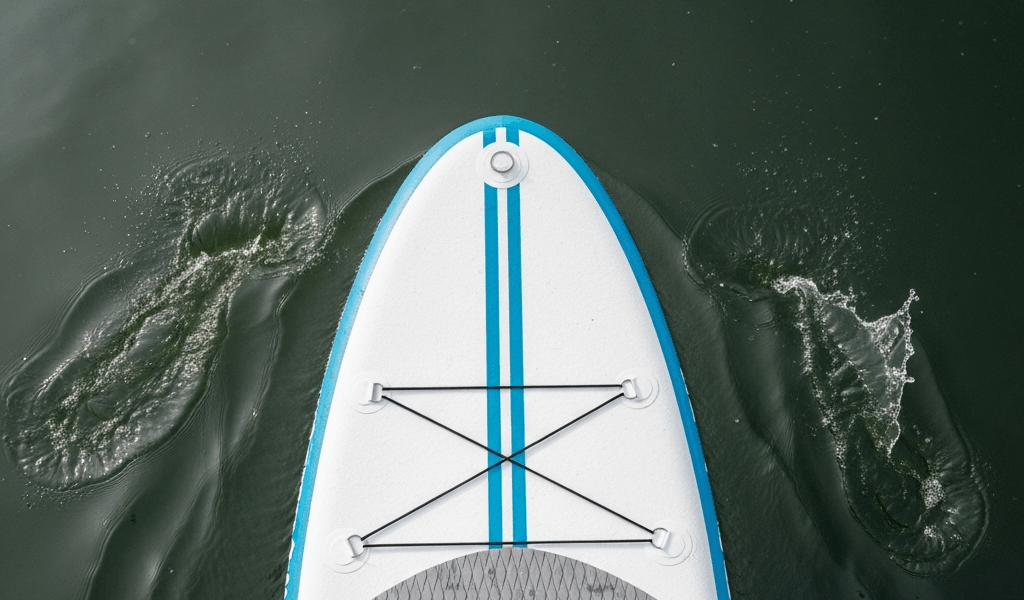
Why Your Paddleboard Spins Instead of Going Straight
Paddleboarding has gotten complicated with all the conflicting advice flying around. Everyone’s got a YouTube fix or a forum thread. Meanwhile you’re out there on the water, spinning in slow circles like a confused compass needle while the regulars glide past without a second glance.
As someone who spent three humbling weeks on Puget Sound convinced my board was defective, I learned everything there is to know about why SUPs spin. Today, I will share it all with you.
Here’s the short version: it’s almost never the board.
Beginners blame the equipment. That’s the instinct. But the actual culprit — in probably 99% of cases — is one of three things: uneven paddle strokes, poor weight distribution, or a fin that isn’t seated right. Probably should have opened with this section, honestly, because once you know the real cause, the fix takes maybe ten minutes on the water.
But what is a “spinning problem,” exactly? In essence, it’s your board refusing to track straight — constantly pulling left or right no matter how hard you paddle. But it’s much more than that. It’s a feedback loop your body creates without knowing it, and fixing it means interrupting that loop deliberately.
So, without further ado, let’s dive in.
Fix Your Paddle Stroke First — This Solves It 80% of the Time
Frustrated by my board veering left on every third stroke, I watched a guide demonstrate the J-stroke one sunny Tuesday at Green Lake — using a beat-up carbon Werner paddle and about thirty seconds of casual explanation. It looked simple. It wasn’t. But the principle stuck.
The J-stroke keeps a board tracking straight. Named for the shape the blade traces underwater — a straight pull alongside the hull, then a slight outward curve at the finish — it counteracts the board’s natural tendency to pivot away from your paddling side. That small hook at the end corrects your direction without requiring a side switch.
What actually matters day-to-day: alternate sides every six to ten strokes. Intentionally. Not when you remember to. If your six strokes on the right aren’t identical in power to your six on the left, you’re drifting — guaranteed. Most beginners think they’re paddling evenly. They’re not. I wasn’t.
Blade angle matters more than almost anyone tells you. If your paddle enters the water tilted toward the board instead of straight vertical, you’re steering on every single stroke. Not paddling — steering. Keep the blade perpendicular to the surface. Straight down, straight out. Not cocked at an angle like you’re digging a ditch.
Then there’s stroke width — probably the most underrated detail out there. The beginner instinct is to reach wide, thinking more arc equals more power. It doesn’t. It spins you. Pull the blade close to the rail. Closer than feels natural. Noticeably closer. Your hands should nearly pass over the board’s edge on the recovery. If there’s six inches or more of air between your hands and the rail on the return, you’re fighting yourself with every stroke.
Here’s a cue that works immediately: picture a line running the length of your board, about three inches in from the edge. That’s your stroke corridor. Stay inside it.
Also — don’t muscle it. A smooth, consistent pull on both sides is faster and straighter than aggressive-on-one-side, lazy-on-the-other. Counterintuitive until it suddenly isn’t.
Check Your Stance and Where You’re Standing on the Board
Weight position is everything. Stand eight or ten inches too far back — which feels like nothing — and you’ve just lifted the nose. This turns your paddleboard into a weather vane. The wind catches that exposed nose, the board rotates toward it, and you spend the entire session correcting rather than paddling.
That’s what makes weight distribution so maddening to beginners. You’re paddling hard. The board still spins. You assume stroke, not stance. But the fix was six inches forward the whole time.
Your landmark is the carry handle. Straddle it. Not in front. Not behind it. Shoulder-width stance, weight distributed evenly across the balls of both feet. On a ten-foot board, that puts you roughly four to five feet from the tail. On a twelve-footer, closer to five and a half. Longer boards forgive more, but the handle rule still applies.
I’m apparently a heavy-footed paddler and centering on the handle works for me while standing even slightly behind it never does — I tested this obsessively on a Bluefin 11-foot inflatable I picked up for $420 at a seasonal sale. Don’t make my mistake of assuming your instincts are calibrated. They aren’t. Not at first.
Inflatable SUP users — and quality inflatable prices have dropped to the $300–$600 range now — need to be especially precise here. A softer platform responds faster to weight shifts. You’ll feel imbalance more dramatically than on a rigid board.
One more thing: bend your knees slightly. Not dramatically. Just unlocked. Straight knees feel stable but they transmit every micro-movement straight into the board. A slight bend absorbs those shifts before they become directional problems.
When the Fin Is Actually the Problem
Loose fin, wrong-sized fin, missing fin — yes, these cause spinning. They’re just rarer than technique issues. Way rarer.
First thing: confirm the fin is fully seated. Most stock fins use a plug-and-box system. The fin slides in and locks down with a click. If it’s not clicked completely, it moves — even a quarter-inch of play destroys directional tracking. Feel the box. Zero play means it’s right. Any wiggle at all means it isn’t.
Second: is it the right size? A fin that’s undersized for your hull lacks the surface area to resist sideways sliding. The board compensates by spinning. A standard all-around fin on a ten-foot board runs 7 to 8 inches tall. Narrow board, beginner hull — check your manual. Wrong fin size won’t fix a technique problem, but it’ll make everything measurably worse.
Third — and this sounds obvious but isn’t — is the fin actually there? Loose fins fall out. Check visually before you blame your stroke.
If your board came with a stock fin and you’ve never swapped it, the fin almost certainly isn’t your problem. Technique almost always is. That’s not a guess. That’s just how it usually goes.
Quick Drill to Test If You’ve Fixed It
This new approach takes off immediately once you’re actually on the water testing it — and eventually it evolves into the automatic correction that experienced paddlers know and rely on today.
Here’s the drill: paddle ten strokes on your right side only. Count how far left you’ve drifted. Lock that number in mentally. Reset. Apply one fix — better blade angle, closer hand position, weight shifted forward — and run ten more strokes on the right.
You should drift less. Sometimes dramatically less. That immediate feedback tells you exactly which fix is doing the work.
Repeat on the left side. Then balance both. That’s it.
Spinning is a beginner phase — almost universal, almost temporary. Two or three weeks of regular water time and one morning you’ll paddle a half-mile straight without consciously thinking about stroke or stance or fin position even once. Balance isn’t something certain paddlers are born with. It’s just something they practiced long enough to stop noticing.


Stay in the loop
Get the latest seattle paddleboard updates delivered to your inbox.