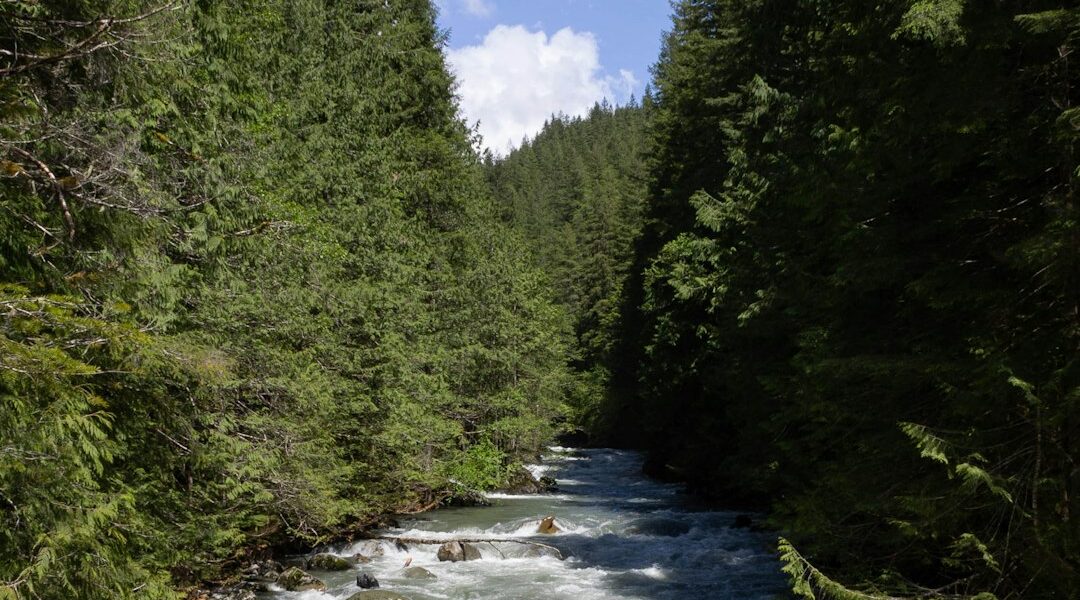
The Snoqualmie River is the only whitewater option in the Seattle day-trip range, and it is a genuinely different experience from lake SUP. Current pushes you downstream whether you want it to or not. Obstacles require reading and reacting. A fall in the river means swimming in moving water rather than climbing back on from flat lake water. But the Snoqualmie Valley scenery — farmland, forest, glacier-fed river — is worth the added complexity.
The Main SUP Run — Carnation to Duvall (or shorter sections)
The flattest and most SUP-appropriate stretch of the lower Snoqualmie runs through the Snoqualmie Valley between Carnation and Duvall. Most of this section is Class I-II depending on flows — moving water with minor rapids that experienced paddlers navigate without issue, but that require active steering and the ability to read current.
📍 Get Directions to Tolt-MacDonald Park (put-in)
Carnation put-in: Tolt-MacDonald Park, 31020 NE 40th St, Carnation, WA 98014. King County park with parking and river access.
Duvall take-out: McCormick Park in Duvall (if doing the full run). About 6 miles downstream from Carnation.
What to Expect on the Water
Current: The Snoqualmie runs at several hundred to several thousand cubic feet per second depending on season. Spring snowmelt (April-June) makes the river fast and powerful — not the time to learn river paddling. Late summer low flows (August-September) are the most forgiving for SUP. Check USGS streamflow data (waterdata.usgs.gov) before any river trip.
The falls: Snoqualmie Falls (the 268-foot waterfall) is north of the main town of Snoqualmie and well upstream of the paddleable lower river. You will not encounter the falls on any run below Carnation. Do not try to paddle anywhere near Snoqualmie Falls — the portage is mandatory for survival.
Critical Differences From Lake SUP
- Leash protocol: A waist-belt quick-release leash is safer than an ankle leash on moving water — if your board gets caught on an obstacle, a fixed ankle leash can hold you underwater. Consider leash-free on easier sections.
- Self-rescue: If you fall, float on your back feet-first downstream until you can safely recover your board. Do not try to stand in fast current — foot entrapment on the bottom is a drowning risk.
- Shuttle logistics: River runs are one-way — you need two vehicles or a willing driver to handle the put-in/take-out shuttle.
- Skill level: River experience required. Lake SUP does not prepare you adequately for moving water. Take a river paddling course or go with someone experienced before attempting this solo.

Stay in the loop
Get the latest seattle paddleboard updates delivered to your inbox.