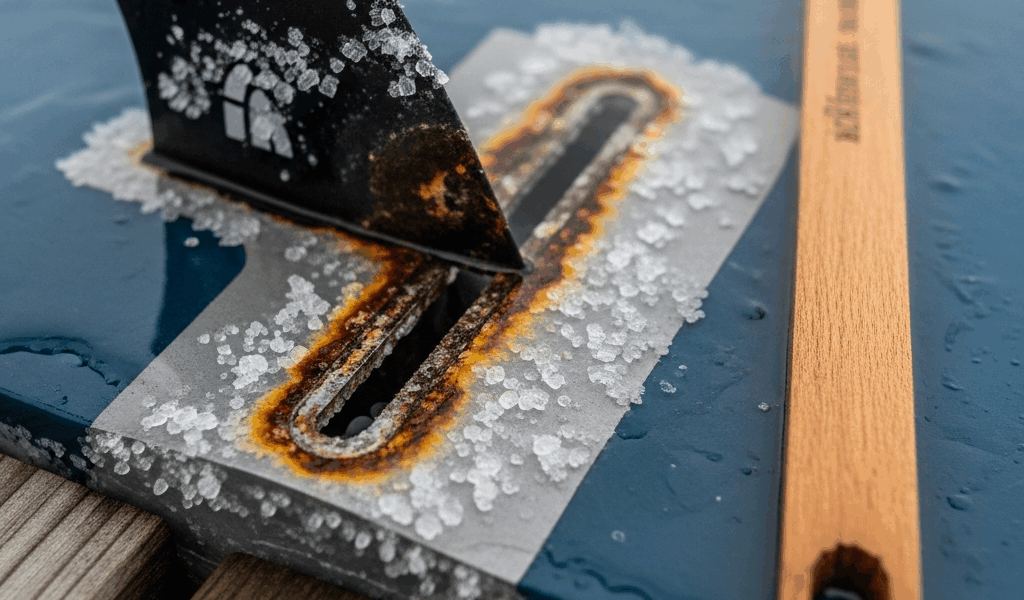
Why Paddleboard Fins Get Stuck
Stuck paddleboard fins have gotten complicated with all the salt and debris flying around—at least if you’re paddling in Puget Sound. I learned about this the hard way, standing in Lake Union on a gray Seattle afternoon, unable to swap fins before a wind shift turned conditions choppy. The culprit? Salt crystallization so thick inside my fin box that even my fin key wouldn’t budge the mechanism.
But what causes stuck fins? In essence, they’re the result of salt, sand, and corrosion building up inside your board’s fin box over time. But it’s much more than that simple answer. Salt crystallization tops the list, especially in saltwater conditions around Seattle. When saltwater seeps into the fin box—through the screw holes, around the edges, or just from regular use—it dries and hardens into crusty deposits that lock everything solid. The Pacific Northwest’s humidity accelerates this process. You get moisture, salt, and heat cycling repeatedly, and suddenly your fin box feels like it’s been welded shut.
Sand and fine debris pile in next. Even a few grains of sand trapped in the fin slot or around the threaded holes create friction that makes removal nearly impossible. I’ve seen paddleboarders come back from the beach with entire pockets of grit lodged inside their boxes. Don’t make my mistake—I thought rinsing my board with a garden hose would keep debris out. It doesn’t. The water actually drives sand deeper into the box if you’re not careful about the angle and pressure.
Over-tightening the fin screws is the third major cause, and honestly, this one’s easy to fall into. Most paddleboarders tighten their fins until they feel “snug,” then keep going. That extra half-turn compounds over weeks. The screw head digs into the box threads, corrosion sets in, and suddenly removal requires real force. Aluminum fin boxes corrode in saltwater when paired with steel or brass screws—a guaranteed reaction. Stainless steel screws prevent this, but not everyone has them installed.
Frustrated by our saltwater environment, I eventually realized it intensifies every one of these problems. Our salt is cold, which slows evaporation and extends crystallization cycles. Our humidity stays high year-round, meaning salt never fully dries between sessions. Winter storage without proper fin removal leads to months of unchecked corrosion inside the box.
What You’ll Need Before You Start
Before you attempt removal, gather these specific tools. You probably own most of them already, honestly.
- Screwdriver set — Both Phillips and flathead tips in small sizes. Cheap multi-bit screwdrivers fail here because the bits don’t fit snugly in the screw heads. I use a Wiha set ($35-45) that actually grips without slipping. Slipping means stripped screws, which turns a 10-minute fix into a board shop visit.
- Penetrating oil — WD-40, Liquid Wrench, or PB Blaster. These break salt bonds and reduce friction. WD-40 might be the best option, as salt removal requires something that cuts through crystallization. That is because the chemistry actually works here, unlike on corroded bike chains. A $6 can lasts through dozens of fin removals.
- Soft cloth or old towel — For wiping away salt residue and keeping the board dry while you work. Lint-free cloth prevents fibers from falling into the fin box, which is apparently the kind of detail that matters more than I thought.
- Plastic fin key or wedge — Most quality fins include a plastic key for the slide-in mechanism. If your fin came with one, keep it accessible. If not, a plastic shim or even a credit card works in a pinch — at least if you want to avoid scratching the box edges with metal tools.
- Warm (not hot) water — Room temperature or slightly warm water is ideal. Heat expands materials differently and can stress the board, but warm water does help salt crystals soften faster than cold water.
- Optional: heat gun or hair dryer on low — Gently warming the fin box area can help salt release without damaging resin or foam. I use a hair dryer for 2-3 minutes before attempting removal. Stay 6 inches away and keep it moving.
Probably should have opened with this section, honestly. I’ve seen people try removal with whatever screwdriver was handy and turn a stuck fin into a stuck, stripped screw situation.
Step-by-Step Removal Process
The process changes slightly depending on your fin system. Most modern paddleboards use screw-in fins with threaded fin boxes, but some use slide-in mechanisms with locking pins.
1. Assess what you’re dealing with — Inspect the fin box closely. Can you see salt deposits or sand around the screw heads or along the slot edges? Look at whether the screws move at all when you apply gentle pressure with the screwdriver. Don’t force anything yet. If the screw turns freely but the fin won’t budge, the problem is inside the box. If the screw won’t turn, salt has seized the threads.
2. Apply penetrating oil generously — Spray or pour penetrating oil directly into the fin box, around all visible screw holes and along any visible gaps. For slide-in fins, work the oil into the slot opening. Let it sit for 15-30 minutes. This isn’t arbitrary—the oil needs time to break salt bonds. I usually grab a coffee and give it time rather than rushing back after 30 seconds.
3. Warm the area lightly if needed — Use a hair dryer on low heat, keeping it 6-8 inches away for 2-3 minutes. This helps penetrating oil penetrate deeper and softens crystallized salt slightly. Avoid excessive heat. The board’s resin and foam can warp if you overheat the area.
4. Work the fastening mechanism gently — For screw-in fins: apply light pressure with your screwdriver and turn counterclockwise, but don’t torque hard. You’re testing whether the oil has done its job. If it doesn’t move, wait another 15 minutes and reapply oil. For slide-in fins: use your plastic fin key or shim and tap it gently along the locking mechanism to create tiny movement that breaks the salt seal.
5. Remove screws one at a time — Once screws turn freely, remove them fully. Wipe each screw with your cloth to prevent salt and debris from falling back into the box. Place screws somewhere safe. Corrosion-prone screws should be replaced with stainless steel—they run about $2-8 per set of four.
6. Extract the fin using leverage, not force — Gripped by salt inside, your fin won’t simply lift out. Place your plastic fin key or shim under the fin’s trailing edge and apply steady, light upward pressure. Rock the fin gently side-to-side if needed. Never yank. Yanking cracks the box’s threaded inserts. I’ve learned this painfully. If it still won’t budge after another oil application and 20 minutes, the salt may need to soften more. Overnight sitting with oil inside is better than one hour of frustrated pulling.
7. Inspect the fin base and box for damage — Once free, check both the fin’s screw holes and the board’s fin box for cracks, corrosion pits, or thread damage. Slight corrosion can be cleaned. Cracked fin boxes require professional repair.
Cleaning the Fin Box After Removal
Removing the stuck fin is half the battle. The next step prevents it from happening again—that’s what makes this maintenance endearing to us local paddleboarders who want our gear to actually work.
Rinse the fin box thoroughly with fresh water. Use a squeeze bottle with a narrow nozzle to reach inside. Flush from multiple angles to dislodge sand and salt residue. You’ll be surprised how much debris comes out—tiny grains that contribute to future sticking.
Dry everything completely. A dry microfiber cloth works, or let the board sit in the sun for an hour. Moisture left inside guarantees salt crystallization will restart immediately.
Use a soft brush or old toothbrush dipped in white vinegar to dissolve any remaining salt deposits on the fin’s base and around the screw holes. Vinegar’s acidity breaks down salt without damaging resin. Rinse again and dry fully.
Apply a very light coat of stainless steel protectant or silicone-based lubricant inside the box and on the fin’s threaded areas. Don’t oversaturate—just enough to create a barrier against saltwater. Excessive lubricant attracts sand instead of repelling it.
How to Prevent Stuck Fins Going Forward
Prevention saves hours of frustration, especially if you paddle in saltwater regularly. So, without further ado, let’s dive into what actually works.
Rinse immediately after every session — This is non-negotiable in Puget Sound conditions. Fresh water dissolves salt before it crystallizes. Takes 90 seconds with a hose or bucket. Skip this one time and salt begins its adhesive work.
Remove fins and store separately — Don’t leave fins attached to your board between sessions. Remove them after paddling, dry the fin box and fin thoroughly, and store both in a cool, dry spot away from sunlight. This breaks the wet salt cycle that causes crystallization.
Check fasteners before every trip — Give each screw one quarter-turn counterclockwise, then retighten gently. This prevents over-tightening creep and breaks any salt bond forming. Takes 30 seconds per board.
Perform annual deep inspection — Once yearly, ideally before winter storage, remove your fins and inspect the box for salt deposits, corrosion, or sand buildup. Clean and dry thoroughly before storing the board. Winter stagnation accelerates corrosion in the Pacific Northwest.
Replace screws with stainless steel — If your board came with brass or steel screws, swap them for stainless grade (A4 preferred, about $8 for a full set). The material difference stops galvanic corrosion cold.
Seattle’s maritime environment makes this maintenance matter. I’m apparently someone who learns things the hard way, and WD-40 works for me while expensive specialty products never have. Salt, humidity, and temperature swings mean your board takes a beating between uses. Thirty seconds of post-session rinsing saves you the 30-minute wrestling match with a stuck fin later.



Stay in the loop
Get the latest seattle paddleboard updates delivered to your inbox.