Why Paddleboard Fins Come Loose in the First Place
Paddleboard fin problems have gotten complicated with all the conflicting advice flying around online. So let me cut through it. There are three actual reasons your fin keeps coming loose — and identifying the right one saves you a genuinely miserable afternoon on the water.
First: a worn or damaged fin box. That’s the socket molded into your board’s hull where the fin locks in. Second: a missing, stripped, or corroded screw or locking tab. Third — and honestly this one’s more common than people admit — user installation error. I’ve personally watched people jam fins in at wrong angles or completely skip tightening the hardware because nobody told them it needed securing. Don’t make my mistake of assuming everyone reads the manual.
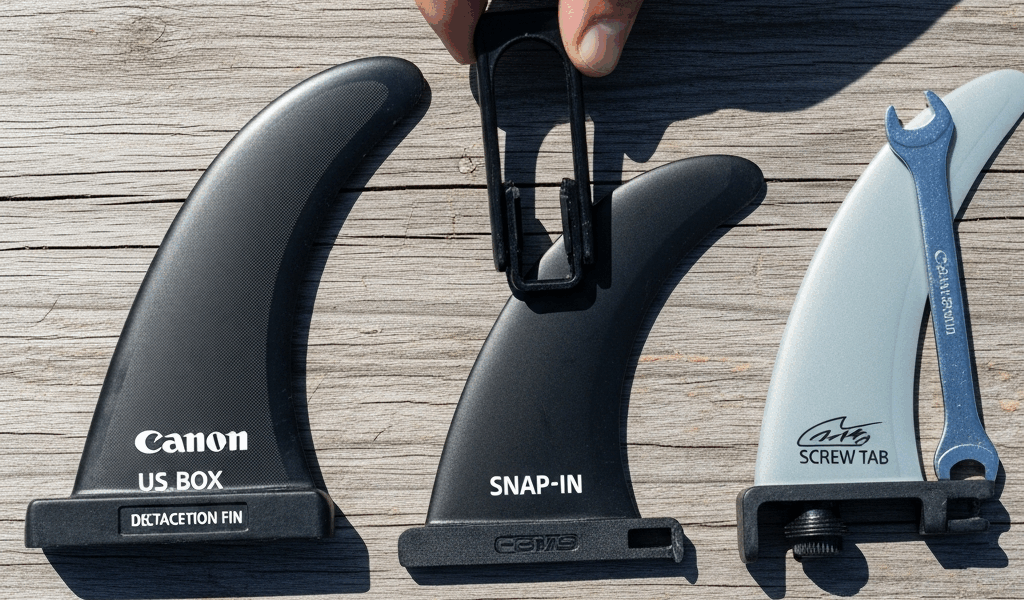
Which fin system your board uses matters enormously here. Hard boards typically run a US fin box with a plate and a single screw. Most inflatables use either snap-in tool-free fins or a small rubber tab paired with a screw. These systems fail in completely different ways. Your fix depends entirely on knowing which type you’re dealing with. So, without further ado, let’s dive in.
How to Fix a Loose US Box Fin
The US box setup is simple enough in theory. A fin slides into a plastic or fiberglass-reinforced socket on the board’s bottom. A metal plate sits on top and holds everything in position. One stainless steel screw threads down through that plate into a threaded insert underneath. When it works, it’s genuinely rock solid. When it doesn’t, you’ll know fast.
Start with the screw. Pull the fin out and look at it directly. Is the screw even there? Sounds ridiculous, but rental boards lose these mid-session constantly — I’ve seen it happen twice at the same put-in. Check the threads carefully. Stripped or corroded threads mean one thing: replace immediately. A new stainless US box screw runs about $3 at any water sports shop. Grab a five-pack while you’re standing there.
Next, check the plate and box alignment. Slide the fin back in and watch where the plate sits relative to the box opening. It should be flush, centered, not cocked sideways. If it’s tilting, pull the fin again and look at the box itself for cracks or warping. A deformed box means the plate will never seat correctly — doesn’t matter how hard you crank that screw.
If the box looks fine but the fin still rotates, the threaded insert is probably stripped. That’s the most common single failure point on boards over four years old. Field fix: pull the fin, cut a thin shim from a piece of old wetsuit or dense rubber, slip it under the plate, reinstall. The added tension fills those microscopic gaps and buys you a few more sessions. Not permanent, but it works.
For an actual permanent repair, you’re looking at either professional re-threading — most local board shops charge $30–60 for that — or accepting the box is done and retrofitting to a different fin system entirely. Some riders retrofit their US boxes with universal-style boxes that accept multiple fin formats. Worth it if your board cost real money.
How to Fix a Snap-In or Tool-Free Fin
Snap-in fins are standard equipment on inflatable SUPs. The fin has a rubber or plastic tab that engages a locking channel on the board. Push down, it clicks. Pull up, it releases. No tools, no screws. In theory, anyway.
When these fail, it’s almost always the tab. Two or three seasons of repeated removal and the rubber develops splits, or the locking notch tears clean off. Pull the fin and look straight at the tab. Any visible cracking? Chunks missing? Does it feel brittle or weirdly soft? Either one means replacement — there’s no patching a tab that’s structurally compromised.
Also check the board-side locking mechanism. That’s the small channel or slot where the tab engages. Grab a flashlight and look inside. I’m apparently someone who skipped this step for an embarrassingly long time — sand and mineral buildup can lock up the mechanism entirely, and fresh water plus a soft brush fixes it immediately. Dry everything completely before you reinstall anything.
A properly functioning snap-in fin has a very specific feel. One firm click — not a soft thud, not three micro-clicks, one click. Once seated, the fin should have zero lateral movement. Any sideways wiggle means the locking mechanism is worn out. Won’t click at all means the tab is misaligned or cracked. Replacement snap-in fins run $25–50 depending on brand and size. That’s cheaper and faster than attempting any kind of structural tab repair.
How to Fix a Screw-Tab Fin on an Inflatable SUP
But what is a screw-tab fin system? In essence, it’s a hybrid — a rubber tab that seats into a socket, secured additionally by a small side screw. But it’s much more than that in practice, because it requires actual maintenance that most people ignore.
Frustrated by fins popping loose on rough water, several inflatable SUP brands — Mobius among them — landed on this design using basic hardware that any paddler can service. This approach has held up across several product generations and eventually evolved into the standard hybrid system that inflatable enthusiasts know and rely on today.
Pull the fin and check the rubber tab first. Look specifically for white stress marks — that’s rubber about to split before it actually splits. If the tab looks intact, move to the screw. Is it tight? Corroded? Cross-threaded, meaning it went in at a slight angle and now won’t fully seat? Cross-threading is permanent damage. New fin, full stop.
Tab is torn but screw is fine? Here’s a practical temporary fix. Wrap two or three layers of waterproof electrical tape around the tab, building up its thickness just slightly. That extra bulk creates tension against the socket walls and can stabilize a loose fin for several weeks. It’s not a long-term solution — at least if you’re paddling more than once a month — but it absolutely works when you’re a week out from a trip and waiting on a replacement.
When to Replace the Fin Box vs Just the Fin
Probably should have opened with this section, honestly. This is the actual decision point everything else leads to.
Replace just the fin if:
- The board’s box, socket, or locking mechanism looks completely undamaged
- A new $3 screw or a $30 replacement fin solves it immediately
- The fin itself is visibly cracked, torn, or bent out of shape
You likely need professional help or a direct conversation with the brand if:
- The US box is visibly cracked or the threaded insert just spins freely with no resistance
- The snap-in locking channel is deformed or broken
- An inflatable’s fin socket is torn or — worse — actively leaking air around it
- You’ve run three different fins on the same board and every one comes loose
On a hard board, a cracked US box can sometimes be epoxied and re-threaded by someone who knows what they’re doing. On an inflatable, a damaged socket is nearly impossible to repair cleanly — contact the manufacturer directly about replacement patch kits or spare parts. Some brands are surprisingly good about this. Others are not.
One last thing. Check fin security before every single session. Takes five seconds — grab each fin and try to rotate it sideways. Loose at the dock means gone in open water. And getting pitched off your board because a fin ejected mid-stroke is nobody’s idea of a good paddle day.




Stay in the loop
Get the latest seattle paddleboard updates delivered to your inbox.