As someone who has been chasing flat water and good conditions across the Pacific Northwest, I’ve picked up a thing or two about getting the most out of SUP in the Pacific Northwest along the way. Let me walk you through what I know.
Figuring out paddle boarding has gotten complicated with all the opinions and marketing flying around, so let me cut through the noise.
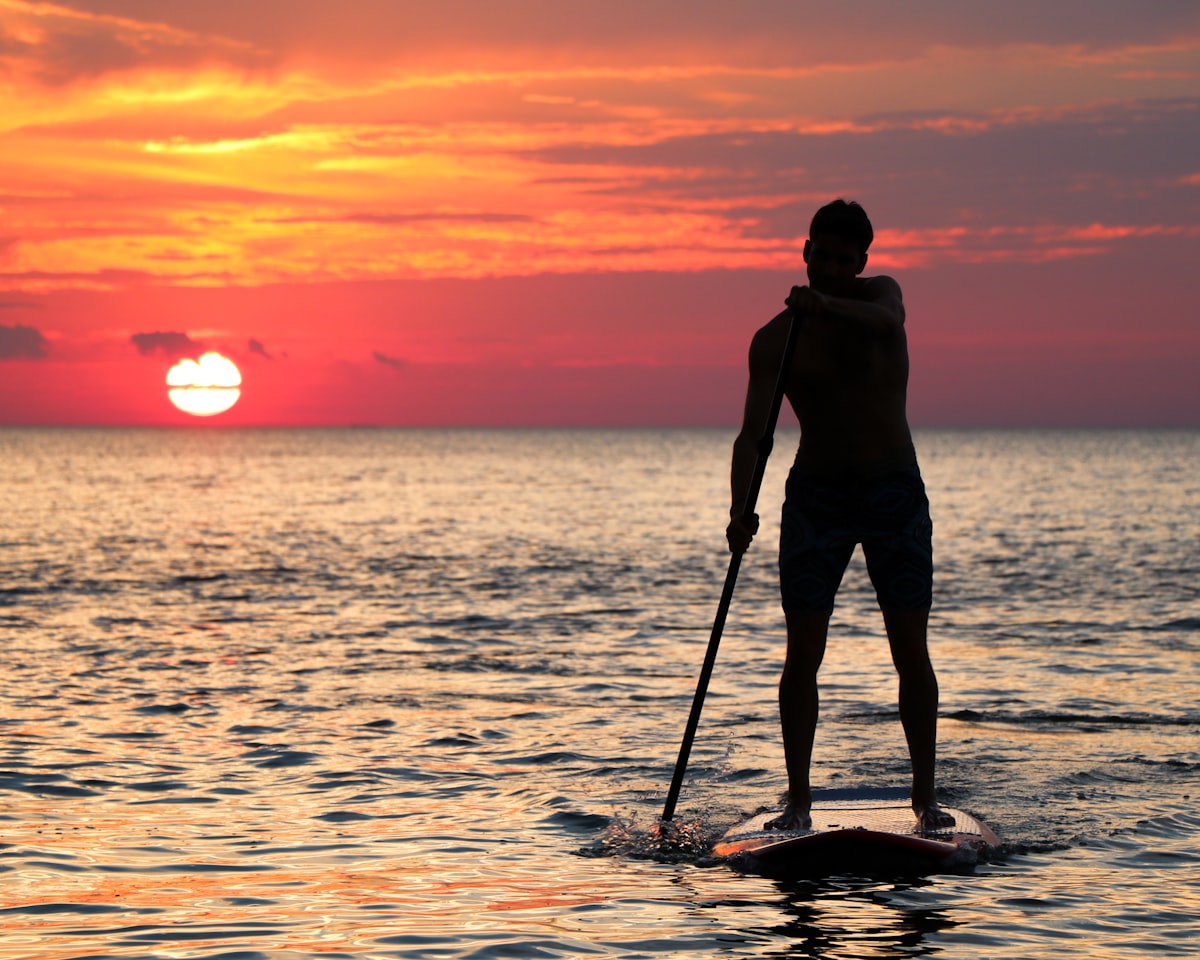
Inflatable Boards: The Easy Answer
If storage and transport are concerns, buy an inflatable. A deflated SUP fits in a backpack-sized bag. You can walk it to Green Lake, bus it to Alki, or throw it in any car trunk. No roof rack required.
The downside is setup time – 10-15 minutes of pumping. Electric pumps help but aren’t instant. If you’re paddling regularly from the same spot, a hardboard on a roof rack is faster once you’re set up.
Roof Racks for Hardboards
Probably should have led with this section, honestly.
A hardboard requires roof transport. Your options:
Existing crossbars: If your car has factory rails or aftermarket crossbars (Yakima, Thule), add SUP-specific pads or just throw down a towel. The board goes deck-side down, fin boxes up. Cam straps through the scupper holes or wrapped around the board – two straps minimum.
Soft racks: Foam blocks and straps that wrap through your car doors. Work okay for short drives, but I’ve seen them shift on the highway. If you’re driving across Seattle in I-5 traffic, spend the money on real crossbars.
No rack at all: Some people hang the board out their rear window or hatchback. Legal in Washington if the board doesn’t extend more than 4 feet past the bumper, but it’s sketchy for longer boards and won’t work for many vehicles. I’ve made that mistake more than once.
Strap Tips
Cam straps, not ratchet straps. Ratchets can crush your board if you over-tighten. Loop the straps through something structural on the board (scupper holes, carry handles) and around the bars, not just over the top of the board. Twist the straps a couple times before running them over the board – reduces wind noise.
Bow and stern lines are optional for short drives but smart for highway speeds. The wind catches boards like sails.
Parking Realities
This next part is what really sealed the deal for me.
Good news: most Seattle paddling spots have free parking. Golden Gardens, Magnuson Park, and Green Lake all have lots. Alki gets crowded on summer weekends – show up early or expect to circle.
Don’t leave a visible rack on your car in some neighborhoods. Thieves know rack + no board = board stored nearby. If you’re parking in Ballard or Capitol Hill overnight, remove or hide the rack hardware.
That’s what makes paddle boarding so special to us Seattle paddlers, honestly.
Anyway, I hope this helps you out. Feel free to drop a comment if you’ve got questions — I’m always happy to chat about this stuff.
Tips for a Stronger Application
Be specific about what you want to learn at the conference and how you’ll apply it. Generic statements about wanting to “learn more about tech” won’t cut it. Identify specific sessions, speakers, or topics that align with your career plan. Show that you’ve done your homework on the conference itself.
If you’re a veteran, highlight how your military experience gives you a unique perspective in the tech space. The intersection of military service and technology is exactly the kind of diversity Google is looking to support. Your background isn’t a limitation — it’s a differentiator that makes you a compelling candidate for this kind of opportunity.